Linen Service for Canadian Businesses: The Complete Commercial Linen, Uniform and Facility Services Guide (2026)
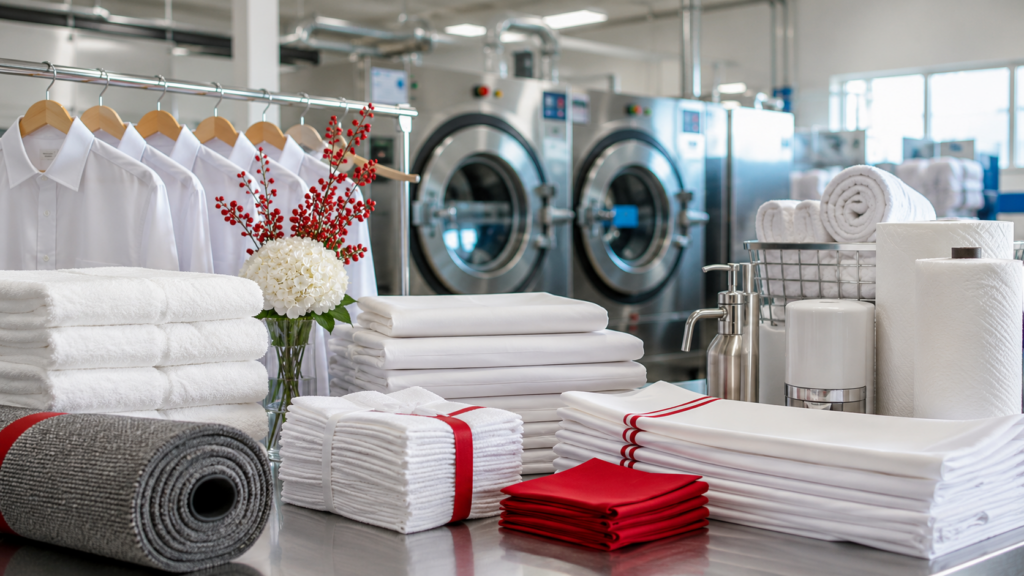
Linen service is one of those business expenses that often gets renewed year after year without much review. A company signs an agreement, uniforms are delivered, floor mats are replaced, shop towels are picked up, washroom supplies are restocked, and the weekly or monthly invoice becomes part of normal operations.
A linen service provides recurring pickup, cleaning, delivery, rental and replacement of business linens, uniforms, floor mats, shop towels, mops, washroom supplies and related facility products. For many Canadian businesses, the biggest cost issues are not the base rental rates alone, but the contract terms, inventory counts, delivery frequency, replacement charges, surcharges and automatic renewal language.
The problem is that many Canadian businesses do not fully understand how these contracts are priced. A commercial linen service agreement may include more than basic linen rental. Depending on the provider and the business, it may also include uniforms, floor mats, dust mops, shop towels, aprons, kitchen towels, table linens, washroom supplies, delivery charges, replacement charges, environmental fees, fuel surcharges and automatic price increases.
Over time, these costs can become difficult to track. For restaurants, hotels, manufacturers, warehouses, healthcare facilities, automotive shops, office buildings and multi-location businesses, linen and uniform service costs can quietly increase without anyone noticing whether the pricing is still competitive.
At The Bill Advisers, we help Canadian businesses review recurring vendor expenses, understand contract terms, identify billing issues and evaluate whether current service arrangements still make financial sense.
This guide explains how commercial linen service works in Canada, what businesses should look for, which fees commonly appear on invoices, and how to approach a linen, uniform or facility service review before renewing or signing a new agreement.
Key Takeaways
- Commercial linen service is not just about towels or tablecloths. Many agreements also include uniforms, floor mats, shop towels, washroom supplies, mops, aprons and other facility service items.
- Businesses often overpay because they do not regularly review service levels, inventory counts, delivery frequency, replacement charges or contract renewal terms.
- Uniform service, linen service, commercial laundry service, floor mat service, shop towel service and washroom supplies may all appear on the same vendor invoice.
- The lowest quoted price is not always the best deal. Contract terms, automatic increases, replacement policies, delivery charges, minimum billing requirements and cancellation clauses can have a major effect on total cost.
- A proper commercial linen service review should examine invoices, contracts, usage, inventory, locations, service frequency and vendor pricing structure.
What Is a Commercial Linen Service?
A commercial linen service provides businesses with recurring rental, cleaning, pickup, delivery and replacement of linens, uniforms, mats, towels and related facility supplies. In many cases, the provider owns the items and the business pays for the ongoing service.
Commercial linen service can include several different categories. Understanding these categories matters because many businesses think they are only paying for linen, when the invoice may actually include uniforms, mats, towels, mops, washroom supplies and other facility services.
Uniform Service
A uniform service provides workwear for employees. This may include shirts, pants, jackets, coveralls, lab coats, aprons, high-visibility garments, flame-resistant clothing, chef coats or branded uniforms.
Businesses use uniform service when they want employees to look professional, maintain consistent branding, meet workplace requirements and avoid managing laundry internally. Uniform services are common in manufacturing, automotive, food processing, restaurants, healthcare, logistics, warehousing and trades-based businesses.
Linen Service
A linen service typically includes recurring pickup, cleaning and delivery of items such as towels, sheets, napkins, tablecloths, kitchen towels, aprons, bar towels, patient linens or hospitality linens. Restaurants, hotels, banquet halls, medical clinics, long-term care homes, fitness facilities, spas and food-service businesses often rely on linen services to maintain clean inventory without operating their own laundry systems.
Floor Mat Service
A floor mat service supplies and replaces entrance mats, safety mats, logo mats, anti-fatigue mats and industrial floor mats. These programs are common in offices, restaurants, retail stores, warehouses, automotive shops, healthcare facilities, industrial sites and commercial buildings. The cost depends on mat type, size, replacement frequency, location count and vendor pricing.
Floor mat service is often reviewed as part of a broader facility safety and housekeeping program, especially because the Canadian Centre for Occupational Health and Safety notes that good housekeeping and proper walking surfaces are important factors in preventing slips, trips and falls.
Shop Towel Service
A shop towel service supplies reusable towels used by automotive shops, manufacturing plants, repair facilities, machine shops, food processors and industrial operations. Shop towel invoices can become expensive when businesses do not monitor towel usage, replacement charges, environmental fees or inventory counts.
Washroom Supplies
Some linen and uniform providers also offer commercial washroom supplies. These may include paper towels, toilet tissue, soap, sanitizer, air fresheners, dispensers, sanitary disposal, urinal screens and related restroom products. These programs can be convenient, but they should be reviewed carefully because products, dispenser programs, delivery charges, refill frequency and contract terms may vary significantly.
Facility Services
Facility services can include a broad group of recurring services that support daily business operations. In the context of linen and uniform providers, facility services may include floor mats, dust mops, wet mops, restroom supplies, cleaning supplies, shop towels, microfiber cloths, uniforms, safety products, first aid supplies and hygiene products.
Many businesses do not realize these items can be bundled into one agreement. That can make billing easier, but it can also make the invoice harder to understand.
Who Uses Linen Services in Canada?
Commercial linen service is used across many industries. The right program depends on how the business operates, how frequently items are used, whether there are health or safety requirements, and how much internal staff time would be required to manage inventory without an outside provider.
- Restaurants may use napkins, tablecloths, kitchen towels, bar towels, aprons, chef coats, entrance mats and washroom supplies. Restaurants and food-service businesses should also consider applicable food safety and sanitation expectations, since Ontario food premises are inspected under public health rules connected to the Health Protection and Promotion Act and Food Premises Regulation.
- Hotels may use hospitality linens, towels, sheets, uniforms, floor mats and facility supplies.
- Manufacturers may use uniform service, shop towel service, mats, mops and industrial facility supplies.
- Automotive businesses may use work uniforms, shop towels, floor mats, washroom products and safety supplies.
- Healthcare and medical facilities may use patient linens, towels, lab coats, mats and washroom supplies. Healthcare and medical facilities should also consider infection prevention expectations when reviewing patient linens, towels, lab coats and related laundry programs; the Public Health Agency of Canada publishes healthcare infection prevention and control guidance for Canadian healthcare settings.
- Property managers and office buildings may use floor mat service, washroom supplies, mops and other facility services. For property managers and commercial buildings, linen-related facility services should be viewed as part of broader building operations; BOMA Canada publishes resources for building owners, operators and managers on building operations, operating costs and industry practices.
- Retail, food processing, warehousing and logistics businesses may use uniform rental, mat service, facility products and recurring washroom supply programs.
How Commercial Linen Contracts Work
Commercial linen contracts are usually structured as recurring service agreements. The provider supplies inventory, schedules deliveries, removes soiled items, cleans and processes them, replaces inventory, and bills the customer based on the agreed service program.
Service Frequency
Service frequency is one of the first pricing factors. Common schedules include weekly service, twice-weekly service, bi-weekly service, monthly service, seasonal service and emergency or extra service calls. A restaurant with daily linen needs may require frequent service. A small office using floor mats and washroom supplies may not. The service schedule should match actual usage.
Inventory Counts
Inventory count is one of the most important parts of a commercial linen service agreement. The provider may assign a set number of uniforms, towels, mats, aprons, linens or other items to the account. The invoice may then be based on that inventory, whether or not every item is used efficiently.
For example, a business may be billed for uniforms assigned to employees who no longer work there. A restaurant may have more napkins or towels in circulation than it needs. A facility may have extra mats that were added over time but never removed from the contract. Inventory should be reviewed regularly.
Minimum Charges
Many agreements include minimum weekly or monthly billing requirements. This means the business may be charged a minimum amount even if actual usage declines. Minimums matter because staffing levels, business volume, seasonal traffic and operating hours can change. If the contract minimum does not change with the business, the company may continue paying for more service than it needs.
Replacement Charges
Replacement charges can appear when items are lost, damaged, worn beyond normal use or not returned. This can include uniform replacement charges, towel replacement charges, mat replacement charges, linen replacement charges, garment loss charges and inventory shortage charges.
Replacement policies should be reviewed carefully. A business should understand when a charge applies, how the replacement cost is calculated, and whether normal wear and tear is included in the regular service fee.
Fuel, Delivery and Environmental Charges
Some providers add fuel surcharges, delivery-related fees, environmental charges or processing fees. These charges may be shown separately on the invoice or built into the service rate. Businesses should review whether these charges are fixed, variable, temporary, permanent, negotiable or tied to a contract formula.
Automatic Renewal Terms
Many linen and uniform agreements include automatic renewal clauses. This means the contract may renew for another term unless the business gives notice within a specific window. A business may need to provide written cancellation notice 60, 90 or 120 days before the renewal date. Missing that window can result in another multi-year term.
Price Increase Language
Some agreements allow annual price increases. Others allow price increases due to labour, fuel, supply, processing, environmental, regulatory or market changes. Businesses should review how often prices can increase, whether notice is required, whether increases are capped, whether all items increase equally, whether surcharges can be added separately, and whether price increases apply during the initial term.
The Most Common Commercial Linen Providers in Canada
Canada has several national, regional and local companies that provide linen, uniform, mat, washroom and facility services. This section is not a recommendation for or against any provider. It is simply an overview of common providers businesses may encounter.
Canadian Linen
Canadian Linen is one of the most recognized linen and uniform service providers in Canada. Businesses may use Canadian Linen for uniforms, mats, towels, linens, washroom supplies and related facility services. For businesses reviewing Canadian Linen invoices, the key is to understand the specific services being billed, the inventory on the account, the service schedule and the contract renewal terms.
Cintas
Cintas is a major provider of uniforms, mats, facility services, restroom supplies, safety products and related business services. Many businesses compare Cintas against other linen, uniform and facility service providers. When reviewing a Cintas agreement, businesses should examine price increases, service items, replacement charges, delivery frequency and contract terms.
UniFirst
UniFirst provides uniform rental, facility service, workwear, mats, towels and related services in many markets. A UniFirst invoice may include several categories beyond uniforms. Businesses should review whether they are paying for products still needed, whether employee counts are accurate and whether the contract reflects current operations.
Aramark
Aramark is known for uniforms, workwear, facility services and other business services. Some businesses may use Aramark for uniforms, towels, mats and related programs. The important question is whether the current program is properly sized, competitively priced and contractually flexible.
Alsco
Alsco provides linen, uniform, towel, mat and facility service programs in various markets. Businesses using Alsco should review service frequency, item counts, pricing structure, surcharges, replacement terms and renewal language.
Local Independent Providers
Many Canadian markets also have local or regional linen and laundry providers. Local providers may offer strong service, flexible contracts or competitive pricing. However, businesses should still review their agreements carefully because smaller providers may also have minimum charges, replacement rules, delivery fees and renewal terms.
How Much Does Linen Service Cost?
Linen service costs vary widely. There is no single standard price because each account is affected by service type, volume, inventory, delivery frequency, location, contract structure, industry, soil level, product type and provider pricing.
Because linen service pricing depends heavily on usage, location, product mix, inventory, contract terms and delivery frequency, businesses should be cautious with generic online price estimates. A restaurant linen service program, a healthcare linen program, a uniform rental program and a floor mat service program can all be priced very differently even when they are supplied by the same vendor.
Rather than focusing only on a unit price, businesses should evaluate the total cost of the program.
Uniform Rental Costs
Uniform rental pricing may depend on:
- Number of employees
- Number of garments per employee
- Garment type
- Branding or embroidery
- Industry requirements
- Cleaning frequency
- Replacement rules
- Delivery schedule
- Contract length
Shop Towel Costs
Shop towel service pricing may depend on:
- Number of towels in circulation
- Soil level
- Pickup frequency
- Replacement charges
- Environmental processing requirements
- Industrial use case
- Delivery schedule
- Minimum billing
Floor Mat Costs
Floor mat service pricing may depend on:
- Number of mats
- Mat sizes
- Mat type
- Logo mats
- Anti-fatigue mats
- Scraper mats
- Seasonal changes
- Pickup frequency
- Location count
Restaurant Linen Costs
Restaurant linen service may include:
- Napkins
- Tablecloths
- Kitchen towels
- Bar towels
- Aprons
- Chef coats
- Mats
- Washroom supplies
Washroom Supply Costs
Commercial washroom supplies may include:
- Soap
- Sanitizer
- Paper towels
- Toilet tissue
- Air fresheners
- Dispensers
- Sanitary disposal
- Urinal screens
- Delivery and refill service
Why Total Cost Matters More Than Unit Price
A vendor may offer a low unit price but make up the difference through higher minimum charges, frequent delivery fees, replacement charges, annual increases, environmental fees, fuel surcharges, long contract terms, strict cancellation language or unnecessary inventory. That is why businesses should review the entire program, not just the quoted rate.
How to Read a Linen Service Invoice
A linen service invoice can look simple, but the important details are often spread across multiple lines. A proper review should separate base rental charges from service fees, delivery charges, surcharges, replacement charges, taxes, credits and one-time adjustments.
- Confirm that every product on the invoice is still being used by the business.
- Compare the item count on the invoice to the actual inventory on site.
- Check whether employee uniform counts match current staffing.
- Identify fuel, environmental, delivery, administrative or processing fees.
- Look for new line items that were not present on earlier invoices.
- Compare current pricing to the original agreement and prior-year invoices.
- Review whether credits, returns or cancelled items are reflected correctly.
This invoice review process is often where cost reduction opportunities first appear. A business may discover it is paying for products no longer needed, old employee uniforms, excessive delivery frequency, or fees that were never clearly explained.
For many businesses, the invoice review is where the first savings opportunities appear. If your company has not reviewed its linen service, uniform service, floor mat service, shop towel service or washroom supply invoices in the last 12 months, a complimentary bill review can help determine whether your current program still matches your actual usage.
Seven Mistakes Businesses Make With Linen and Uniform Services
1. Automatically Renewing the Contract
The biggest mistake is allowing the contract to renew without review. A business should know its renewal date, cancellation window, notice requirements and current market alternatives.
2. Never Reviewing Invoices
Many businesses approve linen invoices because the service is familiar and recurring. Recurring does not always mean correct. Invoices should be reviewed for item counts, pricing changes, surcharges, service frequency, replacement fees and products no longer needed.
3. Accepting Annual Price Increases Without Question
Annual increases may be allowed under the contract, but they should still be reviewed. Businesses should ask whether notice was provided, whether the increase is permitted, whether it applies to all items, whether it is reasonable and whether better terms are available.
4. Not Auditing Inventory
Inventory drift is common. Employees leave, locations change, mats are moved, towels disappear, products are added and service levels change. If inventory is not audited, the business may pay for more than it uses.
5. Paying for Missing or Damaged Items Without Review
Replacement charges should be verified. Businesses should understand whether items are truly missing, whether the count is accurate and whether the contract allows the charge.
6. Ignoring Delivery Frequency
Delivery frequency should match operational need. Too much service can increase costs. Too little service can create operational problems. The goal is to align service frequency with actual usage.
7. Assuming Every Location Has the Same Pricing
Multi-location businesses often have inconsistent pricing. One location may have different rates, surcharges, service levels or contract terms than another. A location-by-location review can identify inconsistencies.
Hidden Charges Businesses Often Miss
Commercial linen service invoices can include charges that are easy to overlook. Some charges may be valid. Others may deserve review. The important point is that businesses should understand what each charge means.
Fuel Charges
Fuel charges may appear as a separate line item or percentage. Businesses should confirm whether the charge is temporary, permanent, contractually allowed and applied correctly.
Environmental Charges
Environmental charges may relate to processing, cleaning, wastewater, disposal or related operating costs. These charges should be transparent and consistent with the agreement.
Inventory Adjustment Charges
Inventory adjustment charges may appear when the provider updates product counts. A business should compare the adjustment to actual inventory on site.
Replacement Charges
Replacement charges may apply to missing, damaged or unreturned items. These charges should be reviewed carefully, especially if they become frequent.
Weekly Service Fees
Some providers charge a recurring service fee in addition to product rental or usage charges. Businesses should understand whether this fee is part of the original quote.
Emergency Delivery Charges
Emergency delivery charges may apply if the business requests extra service outside the regular schedule. These charges can be reasonable, but they should not become a recurring substitute for properly sized service.
Administrative Fees
Administrative fees can appear under different names. Businesses should confirm what the fee covers and whether it was disclosed in the agreement.
How to Negotiate a Better Linen Contract
A strong negotiation starts before asking for a lower price. It starts with understanding the current program. The more clearly a business can define what it uses, what it needs and what it is currently paying, the stronger its negotiating position becomes.
Know Your Inventory
Before negotiating, businesses should know the number of uniforms, employees assigned garments, floor mats, towels, aprons, washroom products, locations, deliveries, item prices and surcharges on the account.
Benchmark Competitors
Businesses should compare the current provider against other options. This does not always mean switching providers. Sometimes the current provider will improve pricing or terms when presented with accurate market comparisons.
Review Utilization
A business should ask whether it is using what it pays for. Reducing unnecessary inventory can be just as valuable as reducing unit price.
Negotiate Price Increase Language
Businesses should try to negotiate limits around price increases, including caps, written notice, locked rates, approval for new charges and limits on surcharge changes.
Negotiate Replacement Terms
Replacement charges should be clearly defined. Businesses should understand what counts as normal wear and tear, what counts as damage and how lost items are calculated.
Negotiate Minimums
Minimum charges can become a problem if the business changes. Seasonal operations and multi-location accounts should pay close attention to minimum billing commitments.
Benchmark Locations
For multi-location businesses, compare invoices across sites. Look for differences in product pricing, service charges, delivery charges, surcharges, inventory counts, contract terms and renewal dates.
Request Competitive Quotes
A competitive quote should match the current service requirements. Do not compare a reduced-service quote to a full-service program.
Review Contract Language
Before signing, review the term length, renewal clause, cancellation notice, price increase language, minimum charges, replacement charges, service frequency, dispute process, assignment clauses and early termination provisions.
When Should a Business Review Its Linen Contract?
A commercial linen service agreement should not sit untouched for years. Businesses should review their linen, uniform and facility service costs at least once per year and before every renewal window.
- After a price increase
- Before renewal
- After staffing changes
- After business volume changes
- After moving or opening new locations
- After acquisitions
- After vendor route, billing or account representative changes
Commercial Linen vs Uniform Service vs Facility Services
Many businesses use these terms interchangeably, but they are not exactly the same.
Commercial Linen Service
Commercial linen service usually refers to the rental, cleaning, pickup, delivery and replacement of linens such as towels, sheets, napkins, tablecloths, aprons, kitchen towels, bar towels and related items.
Uniform Service
Uniform service focuses on employee garments such as shirts, pants, jackets, coveralls, lab coats, chef coats, aprons, high-visibility clothing and branded workwear.
Facility Services
Facility services may include mats, mops, washroom supplies, towels, hygiene products and other recurring support services. This category is broad and can overlap with linen and uniform providers.
The difference matters because a business may think it only has a linen agreement when the invoice actually includes uniforms, mats, washroom supplies, shop towels and facility services. A proper review separates each category so the business can understand what it is paying for.
Pre-Renewal Linen Service Checklist
Before renewing a linen service, uniform service or facility services agreement, businesses should complete a practical review.
- Gather the current contract, amendments and the last 12 months of invoices.
- Confirm the contract renewal date and cancellation notice deadline.
- List every product and service currently billed.
- Compare billed inventory to actual inventory on site.
- Remove uniforms assigned to inactive employees.
- Review all fuel, environmental, delivery, administrative and replacement charges.
- Compare current rates to the original contract and prior-year invoices.
- Ask whether the current delivery frequency still matches the business.
- Request a service audit before signing a renewal.
- Get comparable quotes using the same inventory and service frequency.
Frequently Asked Questions
What is commercial linen service?
Commercial linen service is a recurring business service that provides pickup, cleaning, delivery, rental and replacement of linens, towels, uniforms, floor mats, shop towels, mops and related facility supplies.
What is facility services?
Facility services is a broad term that can include recurring products and services used to support business operations. In the linen and uniform industry, it may include floor mats, washroom supplies, shop towels, mops, towels, hygiene products and related supplies.
What is a uniform service?
A uniform service provides employee garments such as shirts, pants, jackets, coveralls, chef coats, aprons, lab coats and workwear. The provider may clean, repair, replace and deliver garments on a regular schedule.
What does Cintas do?
Cintas is a major provider of uniforms, mats, facility services, restroom supplies, safety products and related business services. Businesses reviewing a Cintas agreement should focus on invoice accuracy, service levels, price increases, contract terms and replacement charges.
Who owns Canadian Linen?
This article is focused on cost review, not ownership. Businesses reviewing a Canadian Linen agreement should focus on invoice accuracy, pricing, service levels, contract terms, renewal language and whether the program still matches current operations.
How much does commercial linen service cost?
Commercial linen service costs depend on item type, location count, service frequency, inventory levels, soil level, replacement terms, surcharges and contract structure. Businesses should review total program cost rather than only the unit price.
How often should linens be replaced?
Replacement frequency depends on item type, usage, wear, industry standards, hygiene requirements and vendor policy. Businesses should understand whether replacement costs are included in regular pricing or charged separately.
Can I negotiate a linen contract?
Yes. Many terms may be negotiable, including pricing, annual increases, replacement charges, minimums, delivery frequency, inventory levels, renewal language and service terms.
Can I switch providers before my contract expires?
That depends on the contract. Some agreements include early termination fees, automatic renewal clauses, notice requirements or minimum term obligations. A business should review the contract before attempting to switch providers.
How do fuel surcharges work?
Fuel surcharges may be added to reflect delivery or transportation costs. Businesses should review whether the surcharge is allowed under the agreement, how it is calculated and whether it changes over time.
What happens if uniforms are lost?
Lost uniforms may result in replacement charges. Businesses should verify employee assignments, returned garments, inventory counts and contract terms before accepting recurring replacement charges.
What is restaurant linen service?
Restaurant linen service typically includes recurring cleaning and delivery of napkins, tablecloths, kitchen towels, bar towels, aprons, chef coats, mats and related items used in food-service operations.
How The Bill Advisers Helps Canadian Businesses Review Linen Costs
The Bill Advisers helps Canadian businesses review recurring vendor expenses, including commercial linen service, uniform service, facility services, floor mat service, shop towel service and washroom supplies.
Our role is not to replace your operations team, finance team or existing vendor relationships. Our role is to provide an independent second set of eyes.
We Review Invoices
We examine current invoices to identify what is being billed, how charges are structured, whether prices have changed and whether service items still match business needs.
We Analyze Contracts
We review contract terms such as renewal language, cancellation notice, price increases, minimums, replacement charges, delivery terms and service obligations.
We Benchmark Pricing
We compare current pricing and service structures against available market alternatives where possible.
We Review Inventory and Utilization
We help businesses understand whether they are paying for unnecessary uniforms, mats, towels, linens, washroom supplies or facility service items.
We Identify Billing Issues
We look for inconsistencies, duplicate charges, unusual increases, unnecessary service levels and account changes that may require further review.
We Help With Vendor Negotiations
When appropriate, we help businesses approach vendors with better information, clearer requirements and a stronger understanding of their options.
We Monitor Future Costs
A successful review should not end after one invoice. Ongoing monitoring helps ensure that negotiated improvements are reflected correctly and that costs do not quietly increase again.
Final Thoughts
Linen service is a necessary operating expense for many Canadian businesses. But necessary does not mean it should go unmanaged.
Whether your company uses linen service, uniform service, commercial laundry service, floor mat service, shop towel service, washroom supplies or broader facility services, the key is to understand what you are paying for.
A business should know what products are on the account, how many items are in circulation, how often service occurs, what fees are being charged, when the contract renews, how price increases work, whether replacement charges are fair, and whether the service still matches current operations.
If your business spends money on uniforms, linens, floor mats, shop towels, washroom supplies or other facility service items, a review may identify opportunities to reduce unnecessary costs, improve contract terms or better align service levels with actual business needs.
The Bill Advisers provides independent commercial bill reviews to help Canadian businesses understand recurring expenses, benchmark vendor pricing and make more informed purchasing decisions.
Request your complimentary Commercial Linen Service Review today.